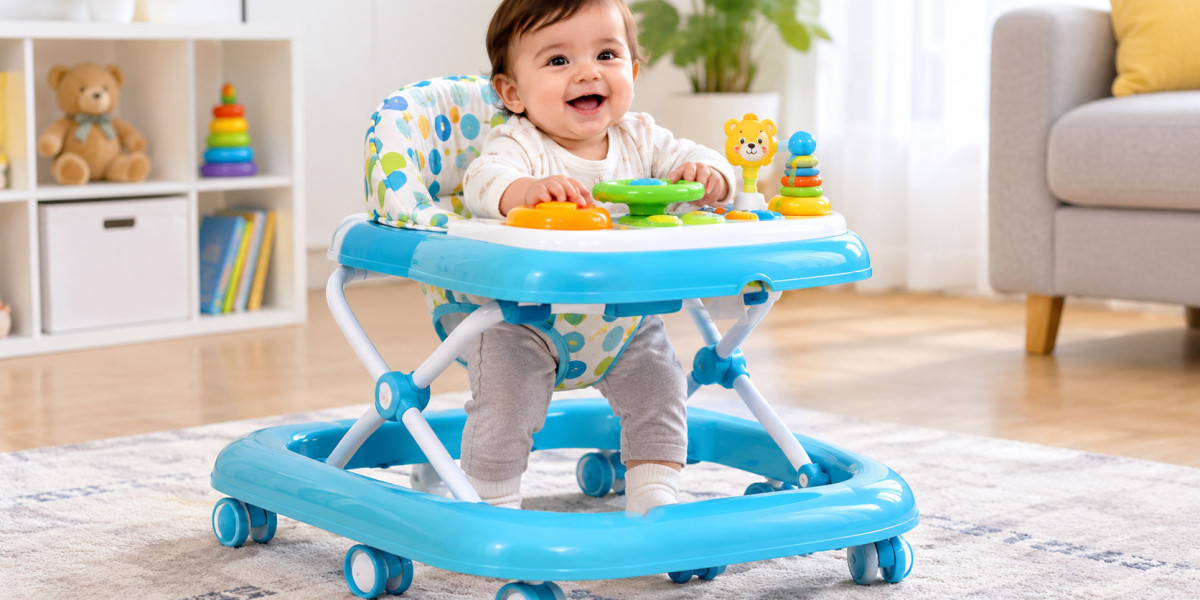

When parents choose a walker, they often notice the seat, toys, wheels, colors, and adjustable features first. These details can be useful, but the quality of the frame is just as important.
The frame is the main structure that supports the walker. It holds the seat, wheels, tray, and other parts together. Because of this, a well-built frame can make a big difference in how stable, comfortable, and practical a walker feels during everyday use.
What Is the Frame of a Baby Walker?
The frame is the supporting structure underneath and around the baby walker. Depending on the design, it may be made from metal, strong plastic, or a combination of different materials.
Its main job is to keep the walker balanced while supporting the baby and connecting all the important parts.
A good frame should feel firm when the walker is placed on the floor. It should not bend easily, feel loose, or move in an uneven way.
Parents do not need to understand technical materials to judge basic frame quality. A simple physical check can already tell a lot about how well the walker has been made.
Why Frame Quality Is Important
Babies naturally move, turn, bounce, and push against different parts of a walker. This means the frame experiences regular pressure during use.
If the frame is weak or poorly connected, the walker may feel unstable. A stronger frame can help the walker stay properly supported while the baby is sitting and moving inside it.
Frame quality also affects how well different parts of the walker work together. For example, wheels may move more smoothly when they are attached to a strong and properly aligned base.
The frame therefore plays an important role in the overall construction of the walker.
A Stable Frame Can Improve Balance
One of the first things parents should notice is whether the walker sits evenly on the floor.
A good frame should keep the walker balanced instead of allowing one side to lean lower than the other.
Parents can gently move the empty walker from side to side before use. If the frame feels unusually flexible or shaky, it may be worth checking the joints and overall construction more carefully.
A wider and well-supported base can also help create a more stable design.
This does not mean that every heavy walker is automatically better. Good design is more important than weight alone.
Check the Joints and Connections
The frame itself is important, but the places where different pieces connect should also be checked.
Look at areas where the frame connects with the seat, tray, wheels, folding sections, and height adjustment system.
These parts should feel secure and properly fitted.
There should not be large gaps, loose pieces, or sections that move unexpectedly.
If the walker has a folding frame, parents should also check that the locking mechanism closes properly before placing the baby inside.
A folding feature can be useful for storage, but it should not make the structure feel unstable during use.
Frame Quality Can Affect Long-Term Use
Baby walkers are moved around frequently. They may be folded, stored, carried from one room to another, or used several times during the day.
Because of this, the frame needs to handle normal daily movement.
A well-made structure is more likely to stay firm over time when it is used according to the manufacturer's instructions.
Parents can periodically inspect the walker for changes. A frame that once felt firm but later develops unusual movement, cracks, damaged joints, or loose connections should be checked before continued use.
Regular inspection is especially useful because small changes may not always be noticed immediately.
The Frame Should Work Well With the Wheels
The wheels and frame are closely connected.
Even good wheels may not perform properly if the base holding them is uneven or poorly constructed.
Parents can test an empty walker on a flat indoor floor and notice whether it moves evenly.
If one wheel does not stay properly aligned, the problem may come from the wheel itself or from the section of the frame where it is attached.
Smooth and controlled movement usually depends on several parts working together rather than one feature alone.
Materials Should Feel Strong and Well Finished
A quality frame should not only feel strong but should also have a clean finish.
Parents can check for sharp areas, rough edges, cracked plastic, damaged metal, or exposed parts around the structure.
The frame should also be appropriate for the baby's recommended weight and age range.
Instead of choosing a walker only because it looks stylish, parents should also read the product information and check how the structure has been designed for regular use.
At ToysUAE, parents can compare different walker designs based on their features, size, comfort, and overall construction before choosing a suitable option for home.
Do Not Judge the Walker by Appearance Alone
Two walkers may look similar in pictures but feel very different when examined closely.
One may have a stronger base and better-connected parts, while another may focus more on decorative features.
Bright colors, music, activity toys, and attractive trays can make a walker more interesting for a baby, but these features should not replace basic build quality.
The structure should always be one of the main things parents consider.
Simple Checks Parents Can Make
Before using a walker, parents can make a few basic checks.
Place the walker on a flat surface and make sure all sides are level. Gently move the frame to check for unusual looseness. Look at the joints and folding locks. Make sure the wheels are attached correctly and inspect the frame for visible damage.
These simple checks only take a short time but can help parents notice possible problems early.
Final Thoughts
The frame quality of a walker is very important because the frame supports almost every major part of the product.
A strong and well-designed structure can help the walker remain balanced, support smooth movement, and handle normal everyday use more reliably.
Parents should look beyond appearance and activity features when comparing walkers. Checking the strength of the frame, joints, base, wheels, and locking sections can give a much better idea of the overall build quality.
The best choice is a walker that feels stable, is suitable for the baby's age and size, and is used according to the manufacturer's guidance.