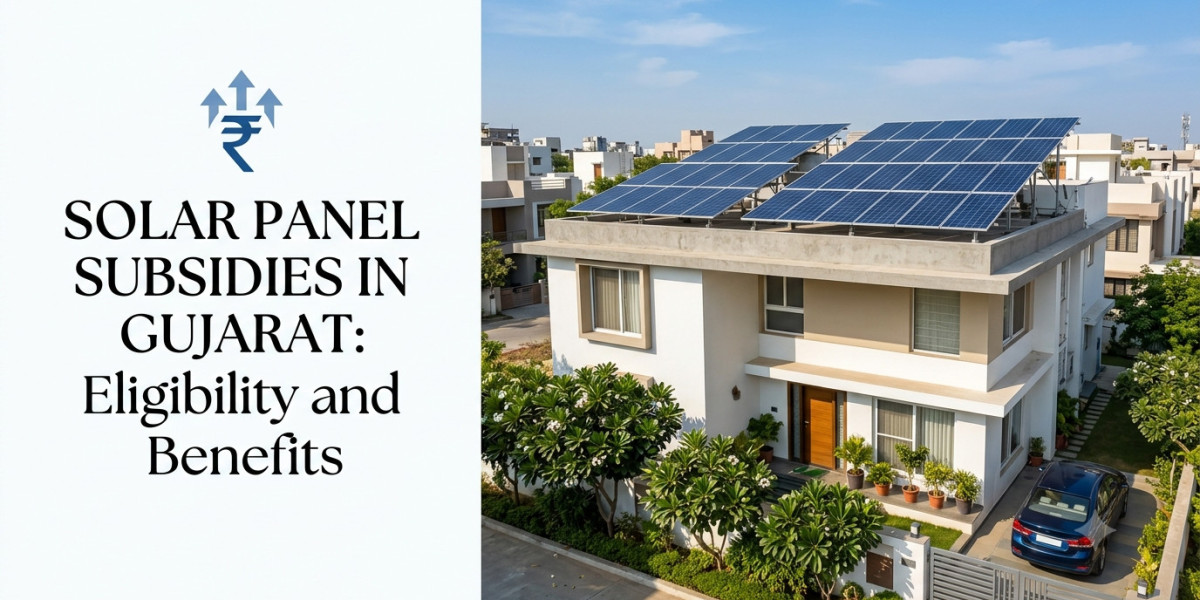

Solar energy is getting more common for households in Gujarat, it helps cut down electricity bills and at the same time, it backs cleaner energy in a general way. Since there is plenty of sun throughout the year, Gujarat really provides favorable conditions for putting solar panels on residential rooftops. On top of that, government incentives have made solar power more accessible, especially for families who want to generate their own electricity day by day, not just once.
The Rooftop Solar scheme under the central government's PM Surya Ghar: Muft Bijli Yojana is meant to support eligible households so they can lower the initial cost of setting up a home solar system. If homeowners take time to understand the eligibility conditions, the subsidy amount, and the application steps, then it becomes easier to decide what to do next.
What Is the Rooftop Solar Subsidy Scheme?
The Rooftop Solar subsidy scheme gives financial support to qualifying residential electricity consumers who install grid-connected solar systems. The whole idea kinda is to nudge more households into producing cleaner electricity and also reduce that dependence on the power coming straight from the grid.
In this scheme, homeowners can mount solar panels on their rooftops and use the electricity that gets made during the day. Any extra electricity that isn’t used can be sent back to the grid as per the relevant net metering or some other approved setting or arrangement.
For families in Gujarat, Rooftop Solar can feel like a practical approach to handle the rising electricity expenses while using the available roof space in a better way.
Who Is Eligible for Solar Panel Subsidies in Gujarat?
Before you apply for that subsidy, homeowners really should confirm they satisfy the eligibility conditions of the scheme; otherwise, it becomes a hassle later. In general, the major factors are something like this
The person applying must be a residential electricity consumer who also has a working electricity connection ( valid ,of course).
- The solar system needs to be installed at the approved residential address, not elsewhere.
- The installation has to use solar equipment that counts under the scheme, meaning it matches the technical requirements too.
- Usually, the system has to be installed via a registered vendor, and that vendor should appear on the official National Portal.
- The applicant also needs to finish the required application, inspection, and commissioning steps.
Finally, the applicant should submit accurate bank account information plus the other documents that are requested when the subsidy payment happens.
Also note, these subsidies under this scheme are aimed at eligible residential consumers. If it is commercial or industrial property, those setups generally do not qualify for the residential subsidy type benefits, even if the solar seems similar. So please check the latest official guidelines before you buy, just to be safe.
How Much Subsidy Can Homeowners Receive?
Under the PM Surya Ghar scheme, households that qualify in Gujarat can get central financial help which is linked to the approved solar system capacity. In general, for hhome-basedsetups in Gujarat, the central subsidy pattern works like this, sort of:
- ₹30,000 per kW for the initial 2 kW.
- Then ₹18,000 for the next 1 kW.
And there is a cap, where the highest central subsidy is ₹78,000 for 3 kW systems or anything above that.
Like, if someone installs a 1 kW system, they may receive ₹30,000, and for a 2 kW installation, it could reach ₹60,000. If the household goes for a 3 kW or higher arrangement, then it may become eligible for that maximum central subsidy of ₹78,000.
These numbers follow the usual subsidy structure applicable to states other than special-category ones. Still, the actual final sum can depend on eligibility, the sanctioned capacity, the current scheme guidelines, and whether the required steps are completed properly. It’s best to confirm the latest terms on the official portal before moving ahead.
Key Benefits of Installing Rooftop Solar
Putting in Rooftop Solar comes with some perks that go beyond the government subsidy, yeah. One of the clearest advantages is that your monthly electricity expenses can go down. If the solar setup is properly sized, it can produce a large share of a home’s daytime power needs, not just a tiny bit either.
There’s also the matter of more control over long-term energy costs. After the installation cost is paid back through electricity savings and any relevant subsidy, the system keeps delivering those savings for many years, as long as you handle basic upkeep and it stays performing well.
Solar energy also reduces reliance on the usual electricity generation and helps cut household carbon emissions. For Gujarat, where sunlight is pretty much there all year, a carefully planed installation can really take advantage of solar power, in a way that actually works.
Still, homeowners should keep in mind that the real savings can vary quite a bit, based on several things like system capacity, roof direction, shading from trees or nearby buildings, how much your household actually uses, local electricity tariffs, and also the billing method that applies to you.
How to Apply for a Rooftop Solar Subsidy
The application process can be pretty straightforward if every step is actually finished the right way, like you don’t skip stuff or rush it.
- First,t register on the official portal: go to the PM Surya Ghar National Portal at pmsuryaghar.gov.in and register there using your state, your electricity distribution company, your consumer account details, and your mobile number.
- Then submit the application: fill in the required information, and apply for rooftop solar installation as the portal instructions say. Iff you miss a field, it can slow you down a bit.
- Next, choose a registered vendor: pick an eligible vendor shown on the portal. Talk through the system capacity, the quality of equipment, installation charges, and the expected electricity generation before you confirm anything. Basically,y get clarity on what you’re buying and how it will perform.
- After that, complete the installation: the vendor will install the approved system, and they’ll do the necessary paperwork too. Then you follow the portal steps for inspection, net-metering arrangements, and commissioning, so everything lines up.
- Then submit the bank details; after the commissioning is successful, share the bank account information that’s required and upload any documents the portal asks for. The subsidy release kicks in after the application passes the required verification checks, so keep an eye on the updates while it’s happening, just in case.
Finally, keep copies: save your application number, invoices, and also installation details, plus the commissioning documents for future reference, you know, just in case you need them later.
Choosing the Right Rooftop Solar Installation Company
Picking a dependable Rooftop Solar Installation Company matters a lot for system performance, safety, and yes, even how well subsidy rules get followed. Homeowners are best off checking the vendor registration on the official portal, plus their hands-on experience, the equipment quality, warranty terms, and what kind of after-sales support they actually offer.
A proper, professional firm should come, look over the roof, roughly map your electricity usage, then suggest a fitting system capacity, and walk you through the full installation cost, in a plain way, not just a vague ballpark. They should also explain the documents needed for subsidy processing, instead of saying something like guaranteed approval, which usually isn’t realistic.
When you choose a Rooftop Solar Installation provider, compare the quotations carefully and confirm if the price already includes mounting structures, wiring, inverter, protection equipment, installation, and also any meter-related work that might apply.
Conclusion
Solar panel subsidies in Gujarat can help eligible households reduce the early outlay of switching to clean energy. If people get the eligibility basics right, check what subsidy amount is actually on offer, and pick a qualified installer, then the whole investment decision becomes a bit more grounded, more measured.
Rooftop solar installation is worth thinking about for households that want to bring down electricity bills and also use renewable energy. But before starting anything, review the newest scheme guidelines on the official portal, then choose a reliable Rooftop Solar Installer, someone who is properly vetted.