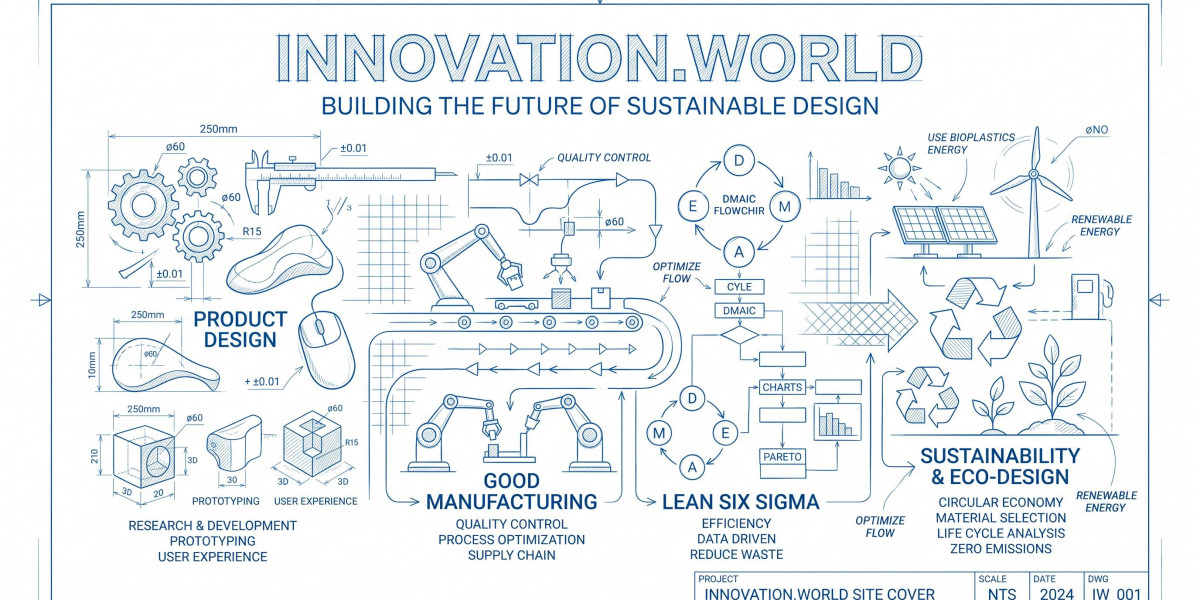

As environmental awareness continues to grow, businesses and designers are exploring new ways to create products that combine functionality, quality, and environmental responsibility. Traditional product development often focuses primarily on appearance, performance, and production costs. However, modern industries must also consider resource consumption, waste generation, material selection, and the environmental impact of products throughout their lifecycles. Ecodesign offers an approach that integrates environmental considerations into product development from the earliest planning stages. By making thoughtful decisions about materials, manufacturing, packaging, transportation, and product lifespan, organizations can develop solutions that support sustainability while meeting customer expectations.
Understanding the Concept of Ecodesign
Ecodesign is a design approach that considers environmental impacts throughout a product's lifecycle. It encourages designers, engineers, and manufacturers to think beyond the immediate production process and evaluate how products affect natural resources from material extraction to disposal or recycling.
This approach applies to many industries, including electronics, construction, furniture, fashion, packaging, transportation, and household products. Each industry has different environmental challenges, but the underlying objective remains similar: develop useful products while reducing unnecessary environmental impacts.
Ecodesign also encourages businesses to consider durability, repairability, energy efficiency, and responsible material selection. These factors can influence both product performance and long-term environmental outcomes.
Why Ecodesign Matters for Modern Businesses
Businesses increasingly recognize that environmental responsibility is connected to long-term operational planning. Customers, industry partners, and regulators are paying greater attention to how products are designed and manufactured.
Ecodesign helps organizations identify opportunities to reduce material consumption, improve manufacturing efficiency, and minimize unnecessary waste. It can also encourage product innovation by motivating teams to explore alternative materials, improved production techniques, and more efficient designs.
Another important benefit is lifecycle awareness. Instead of considering only the initial manufacturing cost, companies can evaluate maintenance, energy consumption, transportation, and end-of-life management. This broader perspective supports more informed product development decisions.
The Main Principles of Ecodesign
Effective ecodesign involves several principles that guide decisions throughout the development process.
Responsible material selection: Designers can investigate recycled, recyclable, renewable, and responsibly sourced materials while considering durability, availability, and technical performance.
Long-lasting and efficient products: Products designed for durability, repair, maintenance, and energy efficiency can help reduce unnecessary resource consumption and replacement requirements.
Applying these principles early can make environmental improvements easier to integrate into the overall product concept.
Sustainable Materials and Manufacturing Processes
Material selection is one of the most important aspects of ecodesign. Different materials require different amounts of energy, water, and natural resources during extraction, processing, and manufacturing.
Designers can investigate recycled metals, responsibly sourced wood, recycled plastics, and alternative materials that meet the technical requirements of a product. However, material choices should always consider performance, safety, durability, and the environmental impacts associated with production.
Manufacturing processes also deserve attention. Energy-efficient machinery, improved production planning, waste reduction, and responsible water management can help businesses make their operations more resource-conscious.
Designing Products for Repair and Recycling
A product's useful life has a significant influence on its overall environmental impact. Products that are difficult to repair or maintain may become waste sooner than necessary.
Ecodesign encourages manufacturers to consider modular construction, accessible replacement components, clear repair instructions, and designs that make maintenance easier. These features can extend product usability and reduce the need for complete replacement.
Recycling should also be considered during the design stage. Using fewer material types, simplifying product disassembly, and clearly identifying recyclable components can make material recovery more practical.
Technology and Innovation in Ecodesign
Modern technologies provide new opportunities to improve sustainable product development. Computer-aided design software allows engineers to evaluate different materials, dimensions, and structures before manufacturing begins.
Digital lifecycle assessment tools can help businesses examine environmental impacts across different stages of a product's existence. Data analytics can also support better resource planning and identify areas where production processes may be improved.
Artificial intelligence and simulation technologies can assist designers in exploring alternative concepts and comparing potential design outcomes. These tools are most effective when combined with reliable information and professional judgment.
Challenges in Implementing Ecodesign
Although ecodesign offers important opportunities, businesses may face challenges when introducing sustainable design practices. Alternative materials may have higher initial costs, suitable suppliers may be limited, and existing production systems may require modifications.
Organizations can address these challenges through gradual implementation, research, supplier collaboration, and employee training. Setting realistic environmental objectives also helps businesses evaluate progress without compromising essential product requirements.
Working across departments is particularly important because design, engineering, procurement, manufacturing, and distribution decisions are closely connected.
The Future of Ecodesign
The future of ecodesign will increasingly involve circular economy principles, innovative materials, improved recycling systems, and smarter manufacturing technologies. Businesses are likely to place greater emphasis on designing products that can be maintained, reused, refurbished, and recovered rather than discarded.
As environmental expectations evolve, organizations that integrate sustainability into their design strategies will have more opportunities to develop products suited to changing market requirements.
Conclusion
Ecodesign is an important approach to creating products that balance functionality, innovation, and environmental responsibility. By considering material selection, manufacturing efficiency, durability, repairability, and recycling from the beginning, businesses can make more informed development decisions. Combining sustainable thinking with modern technology and effective collaboration can support continuous improvement across different industries. Exploring Ecodesign can also help designers, manufacturers, and professionals discover ideas and developments shaping the future of sustainable product innovation.