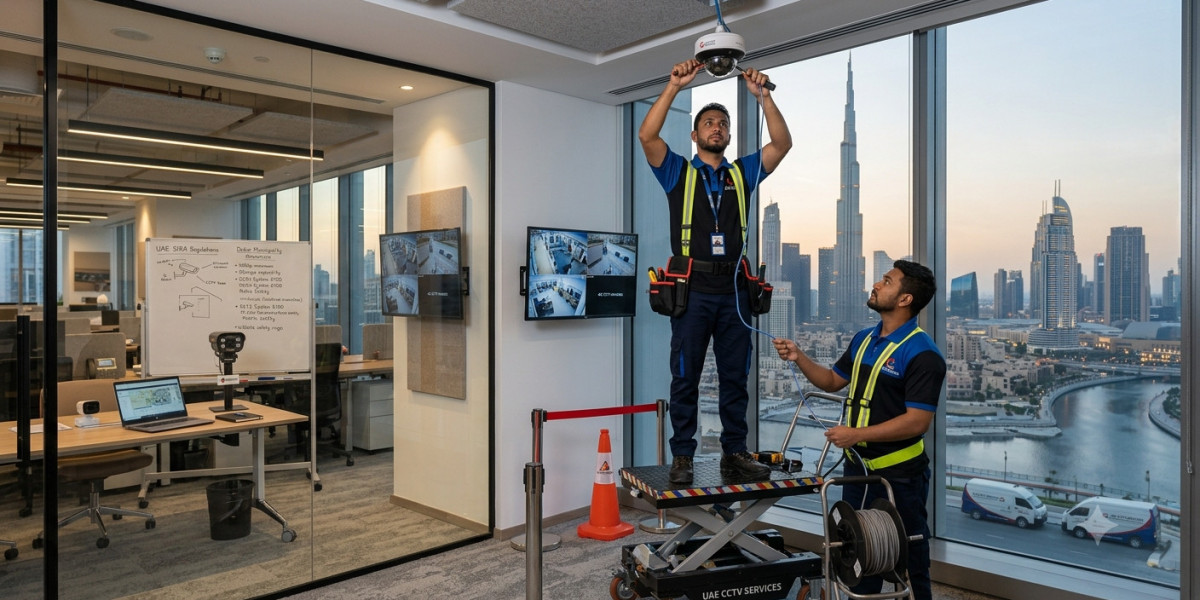

"How does CCTV installation work?" is a question with a genuinely different answer depending on what property someone is starting from. Installing a system in a new-build villa before the walls are finished is a fundamentally different project than retrofitting an occupied apartment, and both are different again from replacing a decade-old analog system that's technically still running but barely usable. Most articles on this topic talk about installation as if it's one uniform process. It isn't, and understanding which scenario actually applies is the fastest way to have a realistic conversation with any installer.
Here's how the process actually differs across the three most common situations in the UAE.
Scenario One: New Construction, Before Walls Close
This is, by a wide margin, the easiest and most cost-effective scenario for a wired CCTV installation service in the UAE, because cable runs can be planned and installed before finishing work begins. The process typically starts with a design phase that happens alongside the broader electrical and structural planning for the property — camera locations get mapped against the architectural drawings, conduit paths get planned to avoid unnecessary drilling or exposed cabling later, and power requirements get coordinated with the electrical contractor from the outset.
The real advantage here isn't just cost savings, though those are significant — it's flexibility. Camera placement can be optimized purely for coverage and function, without the compromises that come from working around existing walls, finished ceilings, or a family already living in the space. Cable routing can run cleanly through walls and ceiling voids rather than needing exposed conduit or creative workarounds.
The main risk in this scenario is timing coordination. CCTV planning needs to happen early enough to be included before walls close, which means engaging an installer during the design and early construction phase rather than treating it as a finishing touch added after the property is otherwise complete. Homeowners and developers who leave this decision too late often end up effectively in the retrofit scenario anyway, despite building a new property, simply because the window for easy wired installation has already passed.
Scenario Two: Retrofitting an Occupied or Finished Property
This is the most common scenario in practice, and it requires a genuinely different approach. Since walls are finished and often occupied, the installer needs to make real decisions about wired versus wireless approaches for each camera location, rather than defaulting to a single method across the whole property.
For locations where running a cable is straightforward — along an accessible roofline, through an attic space, or where existing conduit already exists — wired installation remains preferable for reliability. For locations where cable routing would mean significant wall or ceiling disruption, a wireless or hybrid approach often makes more practical sense, accepting a modest tradeoff in reliability for a much less invasive installation.
A good installer walks a retrofit property carefully before finalizing this plan, identifying which specific camera locations can reasonably be wired and which genuinely need a wireless solution, rather than either forcing wired cable through every wall regardless of disruption or defaulting to wireless everywhere for convenience even where wiring would have been reasonably achievable.
Timeline in this scenario also depends heavily on occupancy. An installer working in a home where a family is actively living needs to plan around daily routines — minimizing disruption during specific hours, protecting furnishings and finishes during any necessary wall work, and often completing work in phases rather than a single continuous block. This is worth discussing explicitly with any installer proposing a retrofit: how will they manage the practical disruption of installation in a home that's actively being lived in, and what does the realistic day-by-day timeline actually look like.
Scenario Three: Upgrading From an Old Analog System
This scenario comes up frequently in the UAE, particularly for properties or businesses with systems installed a decade or more ago. Old analog CCTV — low resolution, limited or no remote access, aging DVR hardware — often still technically functions, which creates a temptation to leave it running rather than invest in an upgrade. But the gap in actual usefulness between an old analog system and a modern IP-based one is substantial enough that this upgrade usually delivers immediate, obvious value.
The installation process here has its own particular considerations. Existing cabling sometimes can be reused if it meets modern requirements, which can meaningfully reduce cost — a competent installer will actually test and evaluate existing cable runs rather than assuming they all need replacement or assuming they're all still viable without checking. Camera mounting locations from the old system are often, though not always, still reasonable for the new one, since the underlying coverage needs usually haven't changed dramatically even if the technology has.
The bigger consideration in this scenario is usually the recording and storage infrastructure, since this is where the most dramatic capability gap exists between old and new systems. Moving from a legacy DVR to a modern NVR with cloud backup, better search and review tools, and substantially improved remote access is often the single biggest functional improvement in this kind of upgrade, even more than the camera hardware itself. A good installer will walk through this specifically — what capability improvement to expect in daily use, not just in spec sheet terms — so the investment's practical value is clear before work begins.
Getting an Accurate Quote Requires Naming the Scenario
One practical takeaway from all of this: when requesting quotes from CCTV installation companies in the UAE, being specific about which scenario actually applies produces far more accurate and comparable proposals. "New construction, walls not yet closed" versus "retrofit of an occupied, finished villa" versus "upgrading an existing analog system with X existing cameras" are different projects with different cost structures, timelines, and technical approaches — and a vague request for "CCTV installation" without this context often results in quotes that aren't actually comparable to each other, because different companies may be assuming different starting conditions.
Matching the Approach to the Actual Situation
None of these three scenarios is inherently more difficult to get right but each rewards a different kind of planning, and a company experienced across all three will approach a project differently depending on which one actually applies, rather than running every installation through the same generic process regardless of starting conditions.
At Smart Living Technology, this scenario-specific approach shapes the very first conversation with any client, understanding not just what property is being secured, but what stage that property is actually at, so the installation plan, timeline, and cost expectations are grounded in reality from day one rather than a generic assumption that doesn't match the actual starting point.