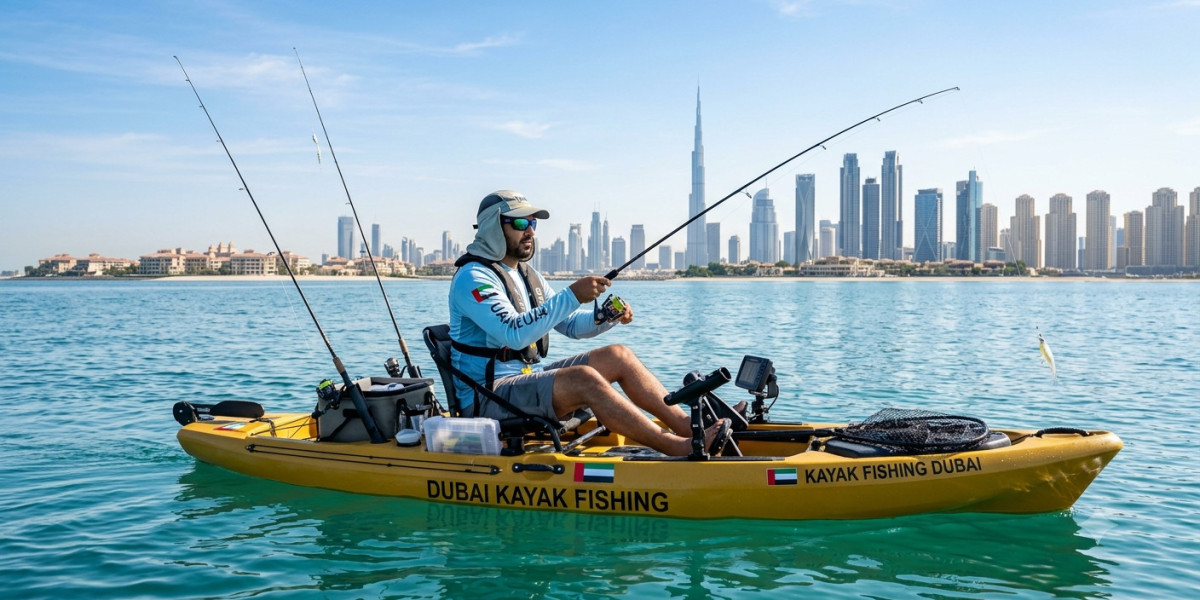

Somewhere between shore fishing and a full boat charter sits an option a lot of Dubai anglers overlook entirely: kayak fishing. It's slower to catch on here than in places like Florida or Australia where it's practically its own culture, but the pieces are all in place — calm coastal waters, warm conditions most of the year, and a growing number of people realizing you don't need a boat to reach genuinely good fishing spots.
This is a look at what kayak fishing in Dubai actually involves, who it suits, and what separates a good first experience from a frustrating one.
Why Kayak Fishing Makes Sense Here
Dubai's coastline is, for the most part, unusually well suited to it. The Gulf side is calmer and shallower than open ocean fishing elsewhere, which matters a lot when you're paddling rather than motoring. Kayaks can reach spots — around breakwaters, near shallow reef structures, along quieter stretches of coast — that shore anglers can't get to and that aren't always worth a full charter boat's time or fuel to reach.
There's also a cost argument that's hard to ignore. Charter boats are the most direct route to good fishing, but they're not cheap, and a kayak setup is a one-time cost that pays for itself after a handful of trips. For anglers who want more independence — deciding when to go, how long to stay, which exact spot to try — without the overhead of boat ownership, kayak fishing fills a real gap.
And there's a quieter appeal too. No engine noise, no other passengers, just you, a paddle, and the water. People who try it often say the appeal isn't just the fishing — it's the version of the water you get access to when you're moving at kayak speed instead of boat speed.
What the Learning Curve Actually Looks Like
Kayak fishing asks more of a beginner than either shore fishing or a guided charter, and it's worth being honest about that going in. You're managing paddling, positioning, and casting all at once, often while trying to keep a rod steady in a boat that moves with every shift of your weight. None of that is difficult exactly, but it takes some getting used to, and skipping that adjustment period is where most bad first experiences come from.
The mistake beginners make most often is treating kayak fishing like an extension of shore fishing with a kayak thrown in — paddling out, dropping a line, and expecting the same experience. In practice, boat positioning matters enormously. Where you sit relative to current, wind, and structure affects everything from how easily you cast to whether you drift off your spot within five minutes of arriving. Learning to anchor properly, read wind direction, and position the kayak before casting is arguably a bigger factor in a good day than the actual fishing technique.
Balance and stability are the other piece people underestimate. Standing to cast, which experienced kayak anglers do regularly, isn't something to attempt on a first outing. Most people are better off mastering seated casting and basic paddling control before worrying about it.
Choosing the Right Setup
Sit-on-top kayaks are the standard choice for fishing, mainly because they're more stable than sit-inside models and make it far easier to move around, reach gear, or deal with a fish once it's hooked. Width matters more than length for beginners — a wider, more stable kayak sacrifices a bit of speed but makes the whole experience considerably less nerve-wracking for someone still finding their balance.
Rod holders, a small dry storage compartment, and a way to secure loose gear are worth having from day one rather than treated as later upgrades — losing a rod or tackle box overboard is a common and entirely avoidable first-trip mistake. A proper life jacket designed for paddling, rather than a bulky standard one, makes a noticeable difference in comfort over a multi-hour session.
Most people renting or buying gear for the first time do better going through an operator who fishes locally and knows what actually holds up in Gulf conditions, rather than guessing based on general kayak fishing advice aimed at different waters.
Where Instruction Changes the Outcome
This is the part of kayak fishing that trial and error handles badly, and it's where a program like Aqua Fishing Academy makes a genuine difference. Kayak fishing sessions through the academy are built around the specific skills that separate a good day from a wasted one — proper positioning relative to wind and current, safe casting technique from a seated position, anchoring, and reading the water in a way that accounts for the fact that you're fishing from something that moves.
That structure matters more here than it does for shore or charter fishing, because kayak fishing genuinely combines two skill sets — paddling and fishing — that most people have only practiced separately, if at all. People who go through structured instruction consistently describe getting to a comfortable, independent level of kayak fishing far faster than those who work it out alone through repeated frustrating trips. It's also simply safer, since instructors cover the water safety fundamentals — capsizing recovery, staying visible to boat traffic, managing fatigue — that matter more here than in calmer, more controlled fishing settings.
Safety Notes Worth Taking Seriously
Kayak fishing in open Gulf water isn't inherently dangerous, but it does require a level of self-sufficiency that shore fishing doesn't. Checking wind and marine forecasts before heading out matters more than it might for other water activities, since wind conditions that seem mild from shore can make paddling back considerably harder than paddling out. Staying within sight of shore or a known landmark, wearing a proper life jacket at all times, and letting someone know your planned route and return time are basic precautions worth treating as non-negotiable rather than optional.
A Genuinely Different Way to Fish
Kayak fishing isn't going to replace charter trips or shore fishing for most people, and it doesn't need to. It occupies its own niche — more independent than a charter, more capable than shore fishing, and quieter than both. For Dubai anglers looking for something a bit different, with the patience to get through an honest learning curve, it's one of the more rewarding ways to spend time on the water the city has to offer.