
It may appear as a visible bulge and can cause discomfort, heaviness, pain, or difficulty during physical activity. Although some hernias may initially produce few symptoms, they can become larger or more complicated over time and may eventually require surgical treatment.
With advances in minimally invasive surgery, robotic technology has become an important option for appropriately selected hernia patients. Robotic Hernia Repair in India combines minimally invasive surgical principles with a robotic platform that gives the surgeon enhanced visualisation, precise instrument control, and greater flexibility during technically demanding procedures.
For patients considering hernia surgery, understanding the procedure, its potential benefits, recovery, and the importance of surgical experience can help them make a more informed decision.
What Is Robotic Hernia Repair?
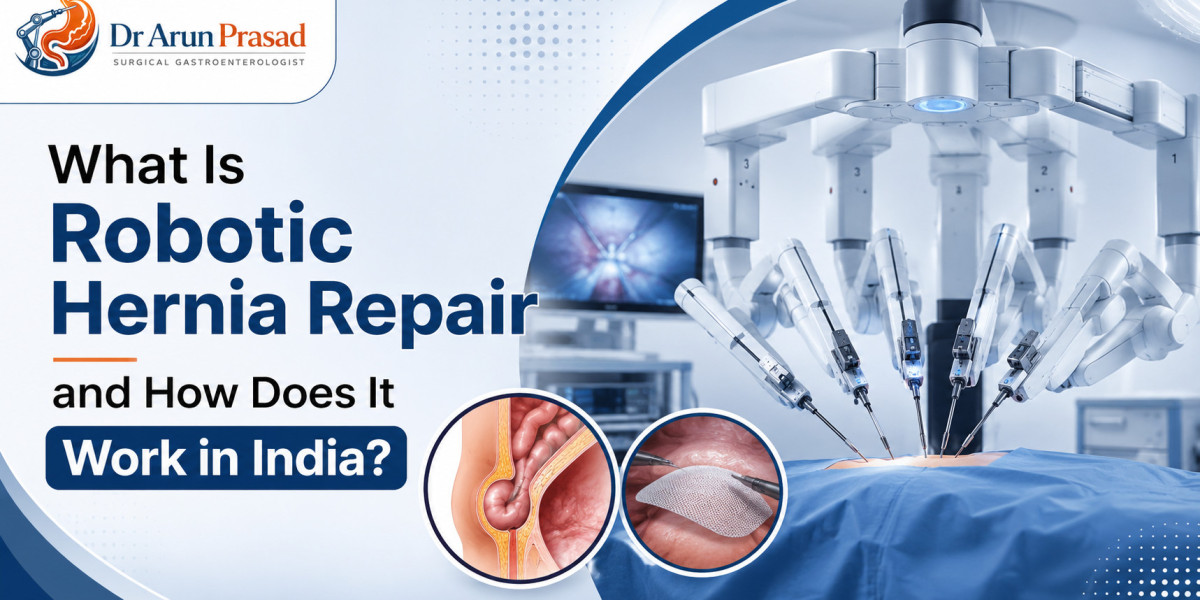
Robotic hernia repair is a minimally invasive surgical technique used to repair a weakness or defect in the abdominal wall. Instead of using one large incision, the surgeon generally operates through several small incisions.
A small camera provides a magnified view of the surgical area, while specialised instruments are introduced through the other openings. The surgeon controls these instruments from a console. The robotic system does not independently perform the operation; every surgical movement is directed by the surgeon.
The goal of the operation is to address the hernia defect and strengthen the weakened area. Depending on the type and complexity of the hernia, the surgeon may reposition the protruding tissue, close or reinforce the defect, and place surgical mesh when clinically appropriate.
Dr Arun Prasad's official treatment information includes inguinal, umbilical, ventral, abdominal wall, and complex hernia surgery. His practice also includes abdominal wall reconstruction for selected patients with large, recurrent, or complicated defects.
How Does Robotic Hernia Repair Work?
The process starts well before the operation. During consultation, the surgeon evaluates the patient's symptoms, medical history, previous abdominal surgeries, physical findings, and relevant imaging.
This assessment is particularly important because not every hernia requires the same surgical approach.
During Robotic Hernia Repair in India, the patient is placed under appropriate anaesthesia and the surgical team creates small access points. A camera is introduced to provide a detailed view of the abdominal wall and surrounding structures.
The surgeon then controls the robotic instruments from the console. Depending on the patient's condition, the procedure may involve carefully dissecting tissues, returning the herniated contents to their appropriate position, repairing the abdominal wall defect, and reinforcing the repair with mesh where indicated.
The exact technique varies according to the hernia's location, size, previous repairs, tissue quality, and overall surgical requirements.
Which Hernias Can Be Treated With Robotic Surgery?
Robotic techniques may be considered for different types of abdominal wall hernias, including:
Inguinal hernia
Umbilical hernia
Ventral hernia
Incisional hernia
Recurrent hernia
Complex abdominal wall hernia
The suitability of robotic surgery depends on the individual patient rather than simply the name of the hernia.
For example, a small uncomplicated hernia may be managed differently from a large recurrent defect following several previous operations. Complex cases may require detailed reconstruction and advanced surgical planning.
Dr Arun Prasad's official website specifically lists inguinal, umbilical, ventral, abdominal wall repair, and complex hernia procedures among his surgical treatments.
Why Does Surgical Experience Matter?
Robotic technology is an important surgical tool, but the technology itself does not replace surgical judgement or experience.
Dr Arun Prasad brings more than three decades of surgical experience and reports having performed more than 15,000 procedures. His professional profile states that he began performing robotic surgery in 2012 and has completed more than 1,000 robotic procedures. His experience includes abdominal wall hernia repair and robotic abdominal wall reconstruction since 2018.
His broader surgical background includes advanced GI surgery, laparoscopic surgery, bariatric surgery, robotic procedures, GI cancer surgery, and abdominal wall reconstruction. This experience is particularly relevant when a patient has a recurrent or complex hernia requiring more than a straightforward repair.
Dr Arun Prasad's Experience in Advanced Robotic Surgery
Dr Arun Prasad's surgical career combines formal specialist training with long-term experience in minimally invasive surgery. He completed his MS in Surgery from Maulana Azad Medical College, New Delhi, followed by advanced GI surgical training at Charing Cross Medical School, London, and obtained FRCS (UK) in 1990. His official profile also describes his early involvement in the development of laparoscopic surgery and his continued work in robotic surgery.
He began robotic surgery in 2012 and has since performed more than 1,000 robotic procedures, according to his official website. His profile also states that he has been involved in robotic abdominal wall reconstruction since 2018.
For patients researching Robotic Hernia Repair in India, this combination of experience in robotic surgery and abdominal wall procedures can be an important factor when evaluating their surgical options.
What Are the Potential Benefits of Robotic Hernia Repair?
When robotic surgery is appropriate, patients may benefit from several features of a minimally invasive approach.
Smaller Incisions
Robotic procedures generally use small access points rather than the larger incision required for many open procedures. This can result in smaller surgical scars.
Detailed Visualisation
The camera provides a magnified view of the operative area, helping the surgeon identify and work around important anatomical structures.
Precise Instrument Control
Robotic instruments are designed to provide controlled movements and flexibility, which can be useful during complex dissection and abdominal wall reconstruction.
Potentially Less Postoperative Discomfort
Minimally invasive surgery may reduce tissue trauma compared with some open procedures and can be associated with less postoperative discomfort.
Faster Functional Recovery
Many patients can gradually return to routine activities after minimally invasive surgery, although recovery depends heavily on the complexity of the repair and individual health factors.
Dr Arun Prasad's website describes his minimally invasive approach as focusing on smaller incisions, reduced pain, shorter hospital stays, and faster recovery when appropriate.
It is important, however, not to assume that robotic surgery is automatically better for every patient. The most suitable approach should be determined after an individual surgical assessment.
Robotic vs Laparoscopic vs Open Hernia Surgery
Patients often want to know whether robotic surgery is better than laparoscopic or open hernia repair.
The answer depends on the individual case.
Open surgery uses a larger incision to directly access the hernia. It remains an appropriate treatment option for many patients and certain types of hernias.
Laparoscopic surgery uses small incisions and a camera to perform the repair. It has been an important part of minimally invasive abdominal surgery for many years.
Robotic surgery uses a robotic platform controlled by the surgeon. It provides enhanced visualisation and instrument articulation that may be useful in selected cases, especially when performing technically complex repairs.
The decision should consider the hernia's location and size, previous operations, recurrence, abdominal wall condition, patient health, and the surgeon's assessment.
Can Robotic Surgery Be Used for Complex Hernias?
Complex hernias can be more challenging because patients may have extensive scar tissue, previous mesh, recurrent defects, weakened abdominal muscles, or large abdominal wall defects.
In these situations, simple closure may not always be sufficient. Some patients require abdominal wall reconstruction to restore strength and function.
Dr Arun Prasad's abdominal wall reconstruction practice describes the use of techniques such as component separation and reinforced mesh placement, with surgical planning tailored to the size and complexity of the defect. Minimally invasive or hybrid approaches may be considered in selected cases.
This is why Robotic Hernia Repair in India should be approached as an individualised surgical decision rather than a one-size-fits-all procedure.
What Is Recovery Like After Robotic Hernia Repair?
Recovery depends on the type of hernia repair and the extent of surgery.
Patients are generally provided with instructions regarding wound care, medication, diet, movement, physical activity, and follow-up appointments. Gentle movement is commonly encouraged according to the surgical team's instructions, while heavy lifting and strenuous activity may need to be restricted during the healing period.
Patients undergoing a straightforward minimally invasive repair may recover differently from those undergoing complex abdominal wall reconstruction. Therefore, it is not appropriate to promise a specific recovery time to every patient.
Following postoperative instructions and attending scheduled follow-up appointments are important parts of recovery.
Is Robotic Hernia Repair Safe?
Robotic hernia surgery can be an appropriate and effective option for carefully selected patients, but, like any surgical procedure, it has potential risks.
Possible complications can include bleeding, infection, postoperative pain, recurrence, fluid collection, anaesthesia-related complications, and mesh-related problems. The risk profile varies depending on the patient's health, hernia characteristics, previous surgeries, and the type of repair performed.
A detailed consultation allows the surgeon to discuss the expected benefits and potential risks before treatment.
Patients should also be cautious of claims promising guaranteed results. Good surgical care involves accurate diagnosis, realistic expectations, appropriate technique, and proper follow-up.
Why Choose an Experienced Robotic Hernia Surgeon?
When searching for Robotic Hernia Repair in India, patients should look beyond the availability of a robotic surgical system.
Important factors include:
Experience in robotic surgery
Experience with hernia and abdominal wall procedures
Ability to manage complex or recurrent cases
Appropriate patient evaluation
Access to modern surgical facilities
Clear explanation of treatment options
Structured postoperative care
Dr Arun Prasad's official profile describes more than 30 years of surgical experience, over 15,000 procedures, more than 1,000 robotic procedures, and experience in abdominal wall reconstruction. His surgical practice includes robotic, laparoscopic, GI, bariatric, hernia, and abdominal wall procedures.
His stated mission also emphasises evidence-based treatment, personalised surgical planning, patient guidance, and recovery support.
Who May Be a Candidate for Robotic Hernia Repair?
Robotic surgery may be considered for patients with certain inguinal, ventral, umbilical, incisional, recurrent, or complex hernias.
However, suitability cannot be determined from symptoms alone. The surgeon may need to assess the size and location of the defect, previous operations, existing mesh, tissue quality, general health, and other relevant factors.
A consultation is therefore the appropriate starting point for anyone considering Robotic Hernia Repair in India.
Final Thoughts
Robotic hernia repair represents an advanced form of minimally invasive surgery in which the surgeon uses a robotic platform to perform a carefully planned repair through small incisions. The technology can provide enhanced visualisation, controlled instrument movement, and flexibility during selected procedures.
However, successful hernia treatment is not simply about using a robot. The surgeon's experience, understanding of abdominal wall anatomy, patient selection, surgical planning, appropriate repair technique, and postoperative care all matter.
For patients considering Robotic Hernia Repair in India, an experienced consultation can help determine whether robotic, laparoscopic, or open surgery is the most appropriate option for their particular condition.
Short FAQs
1. What is robotic hernia repair?
Robotic hernia repair uses surgeon-controlled robotic instruments through small minimally invasive incisions.
2. Is robotic hernia repair safe?
It can be appropriate for selected patients after proper evaluation by an experienced surgical team.
3. How long does robotic hernia repair take?
Surgery time varies according to hernia type, size, complexity, and previous abdominal operations.
4. How long is recovery after robotic hernia repair?
Recovery varies depending on the procedure, patient health, and complexity of the hernia repair.
5. Who is suitable for robotic hernia repair?
Suitability depends on hernia characteristics, medical history, previous surgery, and individual surgical assessment.