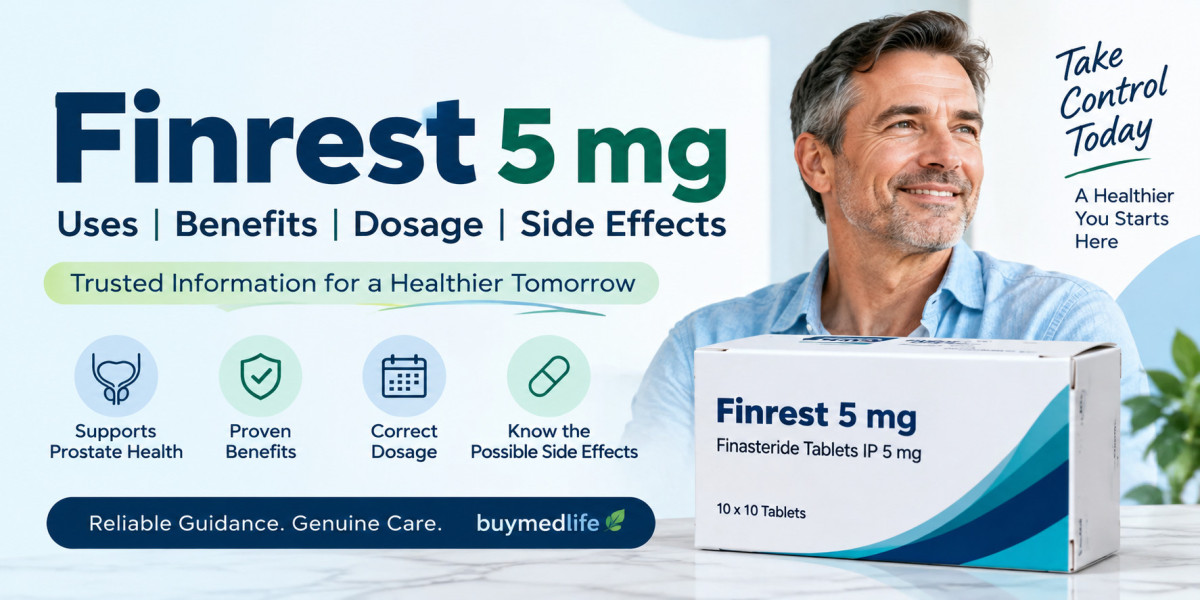

Hair loss can be a gradual process, often beginning with a receding hairline, thinning around the crown, or an overall reduction in hair density. For men with androgen-related hair loss, hormones and genetics can play a major role. Finasteride is one medicine used to reduce the influence of dihydrotestosterone (DHT), a hormone associated with male pattern hair loss.
Finrest 5 mg contains finasteride and is a prescription medicine primarily used at this strength for certain prostate-related conditions. Lower-dose finasteride is commonly used for male pattern hair loss. Understanding the differences between strengths is important before considering treatment.
What Is Finrest 5 mg?
Finrest 5 mg is a tablet containing 5 mg of finasteride. It belongs to the 5-alpha-reductase inhibitor class of medicines.
Finasteride works by inhibiting the conversion of testosterone into DHT. DHT contributes to prostate enlargement and can also affect susceptible hair follicles in men with androgenetic hair loss.
Although finasteride has a role in hair-loss treatment, the 5 mg strength should not be self-selected for hair loss. The appropriate dose depends on the condition being treated and should be determined by a qualified healthcare professional.
Why Is DHT Important in Hair Loss?
DHT is an androgen produced when testosterone is converted by the enzyme 5-alpha-reductase. In genetically predisposed men, DHT can cause susceptible scalp follicles to gradually shrink.
As follicles become smaller, they may produce finer and shorter hairs. Over time, this process can result in visible thinning.
Finasteride reduces DHT production by inhibiting 5-alpha-reductase. Lowering DHT may slow the follicular miniaturisation process in men with male pattern hair loss when finasteride is used at the appropriate prescribed strength.
Finrest 5 mg and Finrest 1 mg
The difference between Finrest 5 mg and Finrest 1 mg is the amount of finasteride in each tablet.
Finasteride 5 mg is commonly prescribed for benign prostatic hyperplasia (BPH), while 1 mg finasteride is the commonly used strength for male pattern hair loss.
This distinction matters because taking a higher amount does not automatically mean better hair-growth results. If your goal is treating hair loss, speak with a healthcare professional about whether Finrest 1 mg or another treatment is appropriate.
Never change from one strength to another without medical advice.
What Results Can You Expect?
Finasteride does not provide immediate results. Hair follicles have natural growth cycles, meaning changes in hair density can take time.
When prescribed specifically for male pattern hair loss, treatment may help slow ongoing hair loss and maintain existing hair. Some men may eventually experience an improvement in hair density.
Individual results can vary based on genetics, age, duration of hair loss, and treatment adherence.
It is also important to understand that continuing treatment is generally necessary to maintain benefits. If treatment is discontinued, the effects may gradually diminish.
Possible Side Effects
Finasteride can cause side effects, although many people tolerate the medicine without significant problems.
Reported side effects can include:
- Decreased libido
- Erectile difficulties
- Ejaculatory changes
- Reduced semen volume
- Breast tenderness or enlargement
- Changes in mood
If these symptoms are persistent or concerning, contact your healthcare professional. Any unusual breast changes should also be evaluated medically.
Serious or persistent mood changes should be discussed with a healthcare professional promptly.
Who Should Avoid Handling Finasteride?
Finasteride tablets should be handled carefully. Pregnant women or women who may become pregnant should not handle crushed or broken tablets because finasteride exposure can potentially affect the development of a male fetus.
Men taking finasteride should also inform their healthcare provider about its use when receiving medical evaluations.
Finasteride and PSA Testing
Finasteride can reduce prostate-specific antigen (PSA) levels. PSA testing may be used as part of prostate-health evaluation.
If you are taking Finrest 5 mg, tell your doctor before having a PSA test. Your healthcare professional can take finasteride use into account when interpreting the result.
Buying Finrest Online Safely
If you are researching where to purchase Finrest online, prioritize legitimate pharmacies and authorised medicine suppliers. Prescription requirements can differ between countries, including the UK, USA, Canada, and Australia.
Buymedlife may be used when researching product availability and medicine information, but prescription medicines should be purchased and used in accordance with applicable local regulations and professional guidance.
Avoid websites that advertise guaranteed results, recommend taking excessive doses, or do not provide appropriate prescription safeguards.
Final Takeaway
Finrest 5 mg contains finasteride, which lowers DHT by inhibiting 5-alpha-reductase. While this mechanism is relevant to male pattern hair loss, the 5 mg strength is primarily associated with prostate-related treatment, whereas Finrest 1 mg is the commonly used finasteride strength for male pattern hair loss.
Before starting, stopping, or changing finasteride treatment, consult a qualified healthcare professional. Correct dosing, realistic expectations, and awareness of potential side effects are essential for safe use.