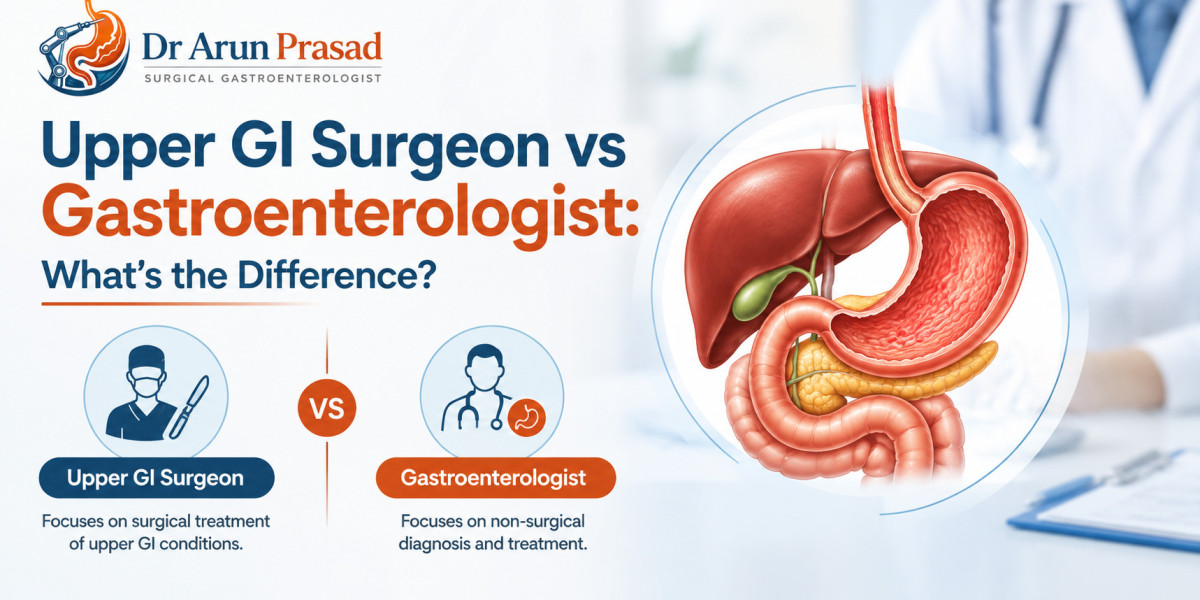

When patients experience persistent acidity, difficulty swallowing, reflux, stomach pain, or other digestive problems, they may be unsure whether they should consult a gastroenterologist or an Upper GI Surgeon in Delhi. Although both specialists deal with digestive system conditions, their roles are different. A gastroenterologist primarily diagnoses and treats digestive diseases with medicines, lifestyle changes, and endoscopic procedures, while an upper GI surgeon focuses on conditions that may require surgical treatment.
What Is a Gastroenterologist?
A gastroenterologist is a medical specialist who diagnoses and manages diseases affecting the digestive system. This includes the esophagus, stomach, small intestine, colon, liver, gallbladder, and pancreas.
Common conditions treated by gastroenterologists include:
Acid reflux and GERD
Gastritis
Peptic ulcers
Irritable bowel syndrome
Inflammatory bowel disease
Liver diseases
Pancreatic disorders
Digestive infections
Chronic constipation or diarrhoea
Gastroenterologists commonly use medicines, dietary recommendations, investigations, and endoscopic procedures to manage these conditions.
For example, if a patient has mild GERD that responds well to medication and lifestyle changes, surgery may not be required. A gastroenterologist can diagnose the problem and develop a suitable non-surgical treatment plan.
What Is an Upper GI Surgeon?
An upper GI surgeon specializes in surgical treatment of conditions affecting the upper part of the digestive system, particularly the esophagus, stomach, and related structures.
Upper GI surgery may be considered when symptoms are severe, complications develop, or medical treatment does not provide sufficient relief.
Some conditions treated through upper GI surgery include:
Severe GERD
Hiatal hernia
Achalasia cardia
Esophageal disorders
Stomach tumors
Upper GI cancers
Complex gastric conditions
Certain foregut disorders
Modern upper GI surgery can often be performed using laparoscopic or robotic techniques. These minimally invasive approaches use small incisions and specialized instruments, which can help reduce postoperative discomfort and support faster recovery in suitable patients.
Dr. Arun Prasad's practice includes advanced upper GI, laparoscopic and robotic procedures for conditions involving the esophagus, stomach and upper digestive tract.
Upper GI Surgeon vs Gastroenterologist: Key Difference
The simplest way to understand the difference is to look at how the condition needs to be treated.
A gastroenterologist generally focuses on diagnosis and non-surgical management, while an upper GI surgeon becomes involved when a surgical procedure is required.
For example:
Patient with occasional acid reflux:
A gastroenterologist may recommend medicines, dietary changes and lifestyle modifications.
Patient with severe GERD despite appropriate medication:
Further evaluation may determine whether anti-reflux surgery could be beneficial.
Patient with a hiatal hernia causing significant symptoms:
A gastroenterologist may diagnose the condition, while an upper GI surgeon can assess whether surgical repair is appropriate.
Patient with an esophageal or stomach tumor:
Treatment may involve a multidisciplinary team, including a gastroenterologist, oncologist and upper GI surgeon.
Therefore, these specialists are not necessarily alternatives to each other. In many cases, they work together.
When Should You See an Upper GI Surgeon?
You may need an upper GI surgical consultation if you have persistent or complicated symptoms such as:
Long-standing acid reflux
Difficulty swallowing food
Repeated regurgitation
Hiatal hernia
Severe heartburn despite treatment
Recurrent vomiting
Unexplained upper abdominal symptoms
Esophageal or stomach abnormalities
A condition that may require surgical treatment
Not every patient with these symptoms requires surgery. A proper evaluation is necessary before deciding on treatment.
An experienced Upper GI Surgeon in India can review your symptoms, previous investigations, endoscopy reports and imaging before determining whether surgery is appropriate.
When Is Surgery Considered for GERD?
GERD is commonly treated initially with medicines and lifestyle changes. However, some patients continue to experience troublesome symptoms despite appropriate treatment.
Surgery may be considered in selected patients with:
Persistent reflux symptoms
Large or symptomatic hiatal hernia
Complications related to reflux
Dependence on long-term medication in selected cases
Confirmed reflux where surgical treatment is appropriate
Fundoplication and other anti-reflux procedures may be performed laparoscopically or with robotic assistance depending on the patient's condition.
Dr. Arun Prasad's upper GI surgical practice includes GERD surgery, hiatal hernia repair, fundoplication, achalasia surgery and esophageal procedures using minimally invasive approaches.
What Happens During an Upper GI Surgical Consultation?
A surgical consultation does not automatically mean that you will need an operation.
The surgeon first understands your symptoms and medical history. Previous endoscopy reports, ultrasound, CT scans, manometry, pH studies or other relevant investigations may be reviewed depending on the condition.
The surgeon then considers:
What is causing the symptoms?
How severe is the condition?
Has medical treatment been effective?
Is there a structural problem?
Would surgery provide meaningful benefit?
Which surgical approach would be most suitable?
This careful evaluation is important because surgery should be recommended only when the expected benefits justify the procedure.
Why Choose Dr. Arun Prasad for Upper GI Surgery?
Dr. Arun Prasad brings more than three decades of surgical experience and has performed more than 15,000 procedures. He completed his surgical training at Maulana Azad Medical College, New Delhi, followed by advanced GI surgical training at Charing Cross Medical School, London, and earned FRCS (UK).
His career has been closely associated with the development of minimally invasive surgery. During his time at Charing Cross Hospital in London, he was involved in the early adoption of laparoscopic surgery. After returning to India, he continued working in advanced laparoscopy, GI cancer surgery, bariatric surgery and robotic surgery.
He began performing robotic surgery in 2012 and has extensive experience in procedures involving the upper digestive tract, including hiatus hernia and fundoplication. His surgical work also includes advanced laparoscopic and robotic procedures for complex gastrointestinal conditions.
For patients considering surgery, the focus is not simply on choosing a procedure. It is about understanding the underlying condition, selecting the appropriate treatment and using the least invasive approach that is suitable for the individual patient.
Can a Gastroenterologist and Upper GI Surgeon Work Together?
Absolutely. In many digestive conditions, collaboration between specialists provides a more complete approach.
A gastroenterologist may identify the problem through consultation, endoscopy or other diagnostic investigations. If the condition requires surgery, an upper GI surgeon can assess the surgical options.
For complex conditions such as severe GERD, hiatal hernia, achalasia, or upper GI cancer, treatment may involve several specialists working together.
Final Thoughts
The difference between a gastroenterologist and an upper GI surgeon mainly comes down to their area of treatment. A gastroenterologist generally manages digestive diseases through medical and endoscopic treatment, while an upper GI surgeon specializes in surgical solutions for conditions affecting the esophagus, stomach and upper digestive tract.
If your symptoms continue despite treatment or your condition may require surgery, consulting an experienced Upper GI Surgeon in India can help you understand whether a surgical approach is appropriate. The decision should always be based on proper diagnosis, investigations and individual medical needs.
Frequently Asked Questions
1. What is the difference between a gastroenterologist and an upper GI surgeon?
A gastroenterologist mainly provides medical and endoscopic treatment, while an upper GI surgeon performs surgical treatment.
2. When should I see an upper GI surgeon?
You may need one for severe GERD, hiatal hernia, achalasia or conditions requiring upper GI surgery.
3. Does GERD always require surgery?
No. Most patients are initially treated with medicines and lifestyle changes.
4. Is upper GI surgery performed laparoscopically?
Many upper GI procedures can be performed laparoscopically or robotically when suitable.
5. Who performs upper GI surgery in Delhi?
Dr. Arun Prasad specializes in advanced laparoscopic and robotic upper GI surgery in Delhi.