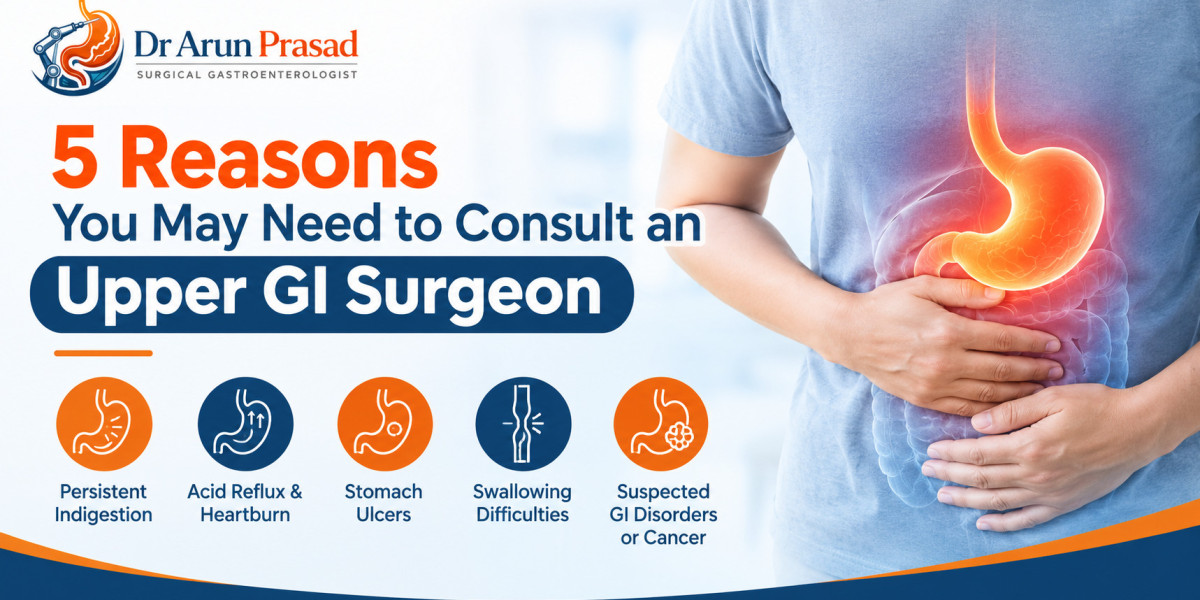

Consulting a Best Upper GI Surgeon in India can help patients understand the cause of their symptoms, available treatment options and whether surgery is appropriate.
An Upper GI surgeon focuses on conditions affecting the upper part of the digestive system, including the esophagus, stomach and related structures. Depending on the diagnosis, treatment may involve medicines, lifestyle changes, endoscopic procedures, laparoscopic surgery or robotic surgery. Dr. Arun Prasad’s practice includes advanced Upper GI, laparoscopic, robotic and minimally invasive procedures for conditions such as GERD, hiatal hernia, achalasia and esophageal disorders.
What Does an Upper GI Surgeon Treat?
Upper GI surgery deals with problems involving the food pipe, stomach and upper digestive tract. Some patients may first visit a physician or gastroenterologist, while others are referred to a surgeon when symptoms persist, tests identify a structural problem or an operation may provide appropriate treatment.
Common conditions evaluated by an Upper GI surgeon include:
Gastroesophageal reflux disease (GERD)
Hiatal and paraesophageal hernia
Achalasia
Esophageal disorders
Swallowing difficulties
Certain stomach and esophageal tumors
Complex upper gastrointestinal conditions
Treatment depends on the individual diagnosis, symptoms, test results and overall health. Surgery is not automatically required for every patient.
1. Persistent Acid Reflux or GERD
Occasional heartburn can occur after certain foods or meals. However, frequent or persistent acid reflux may require further medical evaluation, particularly when symptoms continue despite appropriate medication and lifestyle changes.
GERD can cause symptoms such as:
Frequent heartburn
Acid or food coming back into the mouth
Chest or upper abdominal discomfort
Difficulty swallowing
Regurgitation
Symptoms that affect sleep or daily activities
An Upper GI surgeon may evaluate whether there is an anatomical reason contributing to reflux. Depending on the findings, treatment may include continued medical management or an anti-reflux procedure such as fundoplication in appropriately selected patients.
Dr. Arun Prasad’s Upper GI practice specifically includes GERD surgery and fundoplication, along with minimally invasive approaches where appropriate.
2. Hiatal Hernia Causing Persistent Symptoms
A hiatal hernia occurs when part of the stomach moves through an opening in the diaphragm. Some hiatal hernias cause no significant symptoms, while others may be associated with reflux, chest discomfort, regurgitation or swallowing problems.
If symptoms remain troublesome despite appropriate treatment, an Upper GI surgical evaluation may be considered.
The surgeon may review investigations such as endoscopy and imaging to understand the size and type of hernia and determine whether surgery is appropriate. Laparoscopic or robotic repair may be considered in selected cases.
Dr. Arun Prasad’s website describes his Upper GI work as including hiatal hernia surgery, GERD surgery and minimally invasive procedures for upper gastrointestinal conditions.
3. Difficulty Swallowing or Achalasia
Difficulty swallowing should not simply be ignored, especially when it becomes persistent or progressively worse.
Achalasia is a disorder in which the lower esophageal sphincter does not relax normally, making it difficult for food and liquids to pass from the esophagus into the stomach. Patients may experience difficulty swallowing, regurgitation, chest discomfort or unintended weight changes.
Diagnosis can involve investigations such as endoscopy, imaging and esophageal manometry. Treatment depends on the specific condition and may include endoscopic or surgical approaches.
Dr. Arun Prasad’s Upper GI and foregut services include achalasia treatment and evaluation of swallowing-related problems. His website also describes the use of laparoscopic and robotic techniques for selected upper GI procedures.
4. A Structural Problem Requires Surgical Treatment
Some digestive conditions are related to structural changes that cannot always be adequately managed with medicines alone.
For example, certain hiatal hernias, esophageal conditions, gastric problems or other upper digestive disorders may eventually require a surgical opinion. A specialist consultation helps determine whether an operation is actually necessary and which approach may be suitable.
Modern Upper GI surgery can include laparoscopic and robotic techniques. These approaches use smaller incisions and specialized instruments, and may offer benefits such as reduced surgical trauma and a shorter recovery period for suitable patients.
However, the appropriate technique depends on the disease, complexity of the procedure and individual patient factors. Open surgery may still be appropriate in some complex situations.
5. You Have Been Advised to Consider Upper GI Surgery
A referral for surgery does not necessarily mean that an operation must immediately be performed. It provides an opportunity to discuss the diagnosis, alternatives, expected benefits, potential risks and recovery.
Before recommending surgery, an experienced Upper GI surgeon may review:
Medical history and symptoms
Endoscopy reports
Imaging scans
Manometry or reflux testing when required
Previous treatments
Overall health
Previous abdominal or GI operations
This detailed assessment is particularly important for complex or recurrent conditions.
Minimally Invasive and Robotic Upper GI Surgery
Advances in laparoscopic and robotic surgery have changed the way many gastrointestinal procedures are performed. Instead of a large open incision, minimally invasive surgery uses smaller access points and specialized instruments.
Potential advantages for appropriately selected patients can include smaller incisions, reduced postoperative discomfort, less scarring and a shorter hospital stay. Robotic surgery can also provide enhanced visualization and controlled instrument movement during selected complex procedures.
Dr. Arun Prasad’s website highlights more than three decades of surgical experience, more than 15,000 procedures, and experience with robotic surgery since 2012. It also lists work involving hiatus hernia and fundoplication, bariatric surgery, abdominal wall hernia repair and GI cancer surgery.
Why Choose Dr. Arun Prasad for Upper GI Surgery?
Choosing a surgeon involves looking at the surgeon’s relevant experience, the procedures they perform, the treatment approach available and how thoroughly the individual condition is evaluated.
Dr. Arun Prasad has a practice focused on GI, advanced laparoscopic, bariatric and robotic surgery. His website states that he has over three decades of surgical experience and more than 15,000 procedures, with robotic surgery experience dating back to 2012.
His Upper GI services cover conditions and procedures involving GERD, hiatal hernia, fundoplication, achalasia, esophageal disorders and selected upper GI cancer conditions. The practice also describes laparoscopic, robotic and minimally invasive approaches for suitable patients.
Another important part of Upper GI care is individualized treatment planning. Dr. Arun Prasad’s foregut surgery information describes assessment using symptoms, endoscopy, imaging, manometry, reflux testing, biopsy reports when required and medical history before deciding on treatment.
For patients looking for a Best Upper GI Surgeon in Delhi, this combination of relevant surgical experience, advanced minimally invasive techniques and condition-specific evaluation can be discussed during a personal consultation.
When Should You Book a Consultation?
Consider speaking with an Upper GI surgeon if you have persistent reflux, difficulty swallowing, a diagnosed hiatal hernia, achalasia or another upper digestive condition for which surgical treatment has been suggested.
Early specialist evaluation can help clarify the diagnosis and explain whether continued medical treatment, an endoscopic procedure or surgery is appropriate. The decision should be based on your individual condition rather than symptoms alone.
If you have severe chest pain, vomiting blood, black stools, severe difficulty swallowing or other urgent symptoms, seek immediate medical attention rather than waiting for a routine surgical consultation.
FAQ’s
1. When should I see an Upper GI surgeon?
Persistent reflux, swallowing difficulty, hiatal hernia or a condition requiring possible surgery may warrant consultation.
2. What conditions does an Upper GI surgeon treat?
Upper GI surgeons treat conditions involving the esophagus, stomach and upper digestive tract.
3. Can GERD require surgery?
Severe or persistent GERD may require surgical evaluation when appropriate medical treatment does not provide adequate control.
4. Is Upper GI surgery possible laparoscopically?
Many selected Upper GI procedures can be performed laparoscopically or robotically, depending on the condition.
5. What tests are needed before Upper GI surgery?
Tests may include endoscopy, imaging, manometry and reflux testing depending on the suspected condition.